Do you have a tight muscle that never seems to relax? Maybe it is a hard “knot” in your back, neck or shoulder that keeps coming back. Rest and stretching do not always fix it.
In such cases, a physiotherapist may suggest dry needling. It is a simple dry needling treatment that uses very thin, sterile needles to release tight spots in your muscles. It is usually done along with exercises and other hands-on care.
In this guide, you will learn what dry needling is, how it works, what it feels like, who it may help and what safety points to know. If you are looking for physiotherapy in Aurangabad (Chhatrapati Sambhajinagar), this article will help you decide your next step.
What Is Dry Needling in Physiotherapy?
Dry needling is a physiotherapy technique. The physiotherapist places thin, sterile, single-use needles into tight muscles or “trigger points”.
It is called “dry” because nothing is injected. The needle is solid and has no medicine or liquid in it.
What is a trigger point?
It is a tight, sore spot inside a muscle. It often feels like a small hard knot. It can cause pain in that spot and sometimes in another area too.
How is it different from acupuncture?
Both use thin needles. But dry needling is used in physiotherapy and is based on checking your muscles, movement and trigger points. Acupuncture comes from a traditional system and uses specific acupuncture points. We explain this further below.
Dry needling is not a stand-alone treatment. It works best as one part of a full plan. That plan usually includes exercises and manual therapy in physiotherapy, where the therapist uses their hands to ease stiff joints and tight muscles.
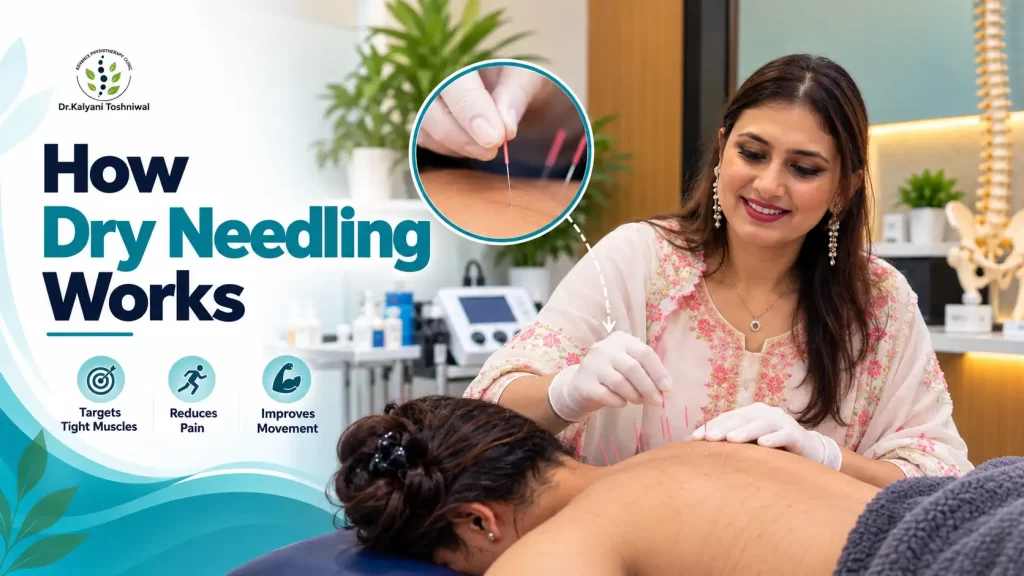
How Does Dry Needling Work?
Every person is different, so your physiotherapist will explain each step before starting. Here is the basic process.
Identifying the Problem Area
First, your physiotherapist asks about your pain, daily routine and health history. Then they check your posture, movement and muscles to find the tight or painful areas.
Selecting the Appropriate Muscles
The muscle that hurts is not always the muscle causing the problem. Your physiotherapist decides which muscles need treatment and whether dry needling is right for you.
Needle Placement
A thin needle is gently placed into the chosen muscle or trigger point. The number of needles and how long they stay depend on your condition and how your body responds.
What Happens During Treatment
You may feel a small pinch, a dull ache or pressure. Sometimes the muscle twitches for a moment. This can happen and is usually short. Your physiotherapist will keep checking how you feel.
What Happens After the Session
The area may feel lighter or looser. Some people feel mild soreness for a day or two. Your physiotherapist will tell you which movements or exercises to do next.
You may see this treatment called dry needling therapy, needling physiotherapy or dry needle therapy. All of these names mean the same thing.
What Conditions Can Dry Needling Help With?
Dry needling may be considered for:
- Muscle tightness
- Trigger points
- Myofascial pain (pain from tight muscles and the tissue around them)
- Back pain
- Neck and shoulder pain
- Sports-related muscle problems
- Some joint and movement problems
It is not a cure for every problem. Your physiotherapist will check you first and then decide if it suits you.
Dry Needling for Back Pain
Many back pain problems involve tight, tired muscles around the spine and hips. In the right cases, dry needling can relax these muscles so you can move more easily and start your exercises.
It usually forms one part of complete physiotherapy treatment for back pain. If the pain also shoots down your leg, the cause may be different, such as sciatica or a slipped disc that can be treated without surgery.
Dry Needling for Neck and Shoulder Pain
Long hours at a desk or on the phone can keep your neck and shoulder muscles tight. This can make movement stiff and may even cause headaches. The same sitting habits that lead to desk job back pain often strain the neck too. Dry needling can relax specific tight muscles, while exercises and posture advice fix the habits behind the problem.
Dry Needling for Sports Injuries
Players and active people often get tight or overworked muscles from training. Dry needling may help in some of these cases, as part of a proper recovery plan. Our physiotherapy services include sports rehabilitation, so treatment is planned around getting you back to your sport safely.
Benefits of Dry Needling
When used correctly, dry needling may:
- Help reduce muscle tightness
- Help manage some types of muscle (myofascial) pain
- Support better movement
- Work well along with exercises
- Support other physiotherapy treatments
Results are different for each person. No treatment can promise a guaranteed result. The best and longest-lasting improvement usually comes when treatment is combined with exercise and fixing the cause of the problem.
Dry Needling vs Acupuncture: What Is the Difference?
Many people ask if these two are the same. Both use thin needles, but their approach is different.
Dry needling
- Commonly used in physiotherapy for muscle and joint problems
- Usually targets muscles and trigger points
- Mostly used for muscle and movement complaints
Acupuncture
- Comes from a traditional system of treatment
- Uses acupuncture points based on the practitioner’s method
- May be used for a wider range of complaints
Neither one is “better” for everyone. The right choice depends on your problem, your comfort and the training of the practitioner.

What to Expect During a Dry Needling Session
Wondering what dry needling feels like? Here is how a normal session goes.
Initial Assessment
Your physiotherapist checks your history, pain and movement. Tell them about any health problems, medicines or worries you have.
Treatment Preparation
You will be seated or lying in a comfortable position. The skin is cleaned, and a new sterile needle is used for you.
Needle Insertion
The needle is placed into the tight muscle. Many people feel only a tiny prick or light pressure.
During the Treatment
You may feel a dull ache, a cramp-like feeling or a quick muscle twitch. These feelings are usually short. Tell your physiotherapist if you feel uncomfortable.
After the Treatment
The needles are removed and the area is checked. You will get simple advice on movement and exercise. The needling part is often short, and the whole visit, including assessment, usually takes longer.
Does Dry Needling Hurt?
It is different for each person. Many people feel only a small pinch, or almost nothing, when the needle goes in. The stronger feeling is usually a muscle twitch or deep ache when a tight spot is treated. It passes quickly.
You may feel mild soreness afterwards, a bit like after a workout. We cannot promise that it will be completely pain-free, but your physiotherapist can adjust the treatment to keep you comfortable
Are There Any Side Effects of Dry Needling?
Dry needling is generally safe when done by a trained professional. Some short-term effects can happen:
- Mild soreness
- A small bruise
- A little bleeding at the needle spot
- Temporary discomfort or tiredness
Always tell your physiotherapist about your health history and medicines, especially blood thinners, before treatment. If something feels unusual or worrying afterwards, contact your physiotherapist or doctor.
How Many Dry Needling Sessions Are Needed?
There is no fixed number for everyone. It depends on:
- The cause of your problem
- How long you have had pain
- How your body responds
- Your full treatment plan
- Your exercise and activity needs
Some people feel better in a few sessions. Others need more time. Remember, dry needling is only one part of your recovery. Your physiotherapist will check your progress and change the plan when needed.
Dry Needling and Other Physiotherapy Treatments
Dry needling often works best when it is combined with other treatments.
Once a tight muscle relaxes, hands-on techniques can help your joints and muscles move better. When the spine or joints are involved, some patients also do well with osteopathy or chiropractic care.
Long-term recovery depends on strength and flexibility, which is why therapeutic exercises usually follow treatment. They keep your muscles strong, so the pain is less likely to return.
To settle pain, your physiotherapist may add electrotherapy treatments such as TENS and IFT. Class 4 laser therapy is another option for sore tendons, and it is a common choice in tendonitis treatment.
While you recover, kinesiotaping therapy can give light support to tired muscles and joints.
All of these are part of the advanced physiotherapy treatments we offer, and your physiotherapist will choose only what suits your condition.
Who May Not Be Suitable for Dry Needling?
Dry needling is not right for everyone. It depends on your health and your assessment. Always share your full health details, medicines and worries with your physiotherapist.
Get professional advice before treatment if you have any concern about:
- Bleeding problems or blood-thinning medicines
- Infection or skin problems in the treatment area
- Pregnancy
- Implanted devices (such as a pacemaker)
- Other medical conditions or a fear of needles
Your physiotherapist will decide whether dry needling is safe for you or whether another treatment is better.
Frequently Asked Questions About Dry Needling
Q1. What is dry needling in physiotherapy?
Ans: It is a treatment where thin, sterile needles are placed into tight muscles or trigger points. It helps reduce muscle tension and supports movement, along with other physiotherapy treatments.
Q2. Is dry needling painful?
Ans: Most people feel a small pinch, ache or muscle twitch. Mild soreness may follow. Experiences differ from person to person.
Q3. What is dry needling used for?
Ans: It is used for muscle tightness, trigger points, myofascial pain, back pain, neck and shoulder pain and sports-related muscle problems, depending on your assessment.
Q4. How long does a dry needling session take?
Ans: The needling part is usually short. The full appointment, including assessment, takes longer. The time depends on your condition and the areas treated.
Q5. How many dry needling sessions are needed?
Ans: It depends on your problem, how long you have had it and how you respond. Your physiotherapist will suggest a plan based on your progress.
Q6. Is dry needling the same as acupuncture?
Ans: No. Both use thin needles, but dry needling is used in physiotherapy to treat muscles and trigger points. Acupuncture follows a traditional system.