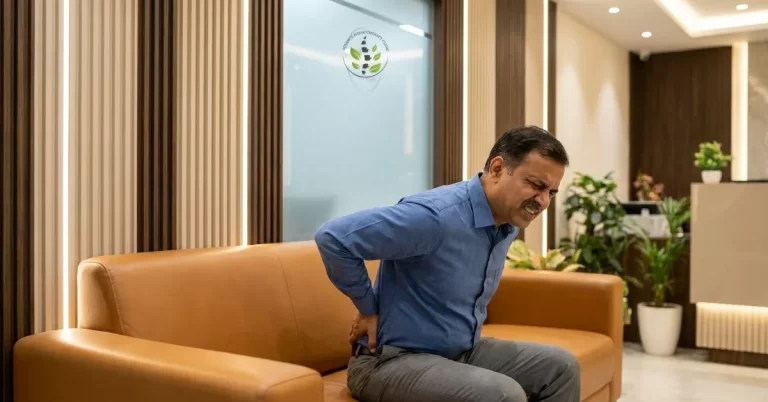
If you are reading this, you likely know the feeling: a sudden, sharp, shooting pain that radiates down your leg, or a deep, locking ache in your lower back or neck that makes simply standing up feel impossible.
When spinal pain strikes, the first thing most patients fear is the word surgery. Being told you need an operation on your spine is terrifying, expensive, and comes with months of painful recovery. But here is the truth that many orthopedic hospitals won’t lead with: over 80% of slipped disc and sciatica cases can be resolved without ever going under the knife.
If you are looking for effective lower back pain treatment, you do not have to jump straight to invasive procedures. Today, finding a slipped disc treatment without surgery is highly achievable using advanced, root-cause physical therapy.
Let’s break down exactly what is happening in your spine, how to find relief, and why surgery should always be your absolute last resort.
What is the Difference Between Sciatica and a Slipped Disc?
Many patients use the terms “sciatica” and “slipped disc” interchangeably, but they are actually two different things—one is the cause, and the other is the symptom.
- The Slipped Disc (The Cause): Your spine is made up of stacked bones (vertebrae) cushioned by soft, jelly-like discs. A slipped disc (or herniated disc) happens when the tough outer layer of that disc tears, and the soft inner jelly bulges out. This can happen in your lower back (lumbar) or your neck (cervical), making specialized back and neck pain treatment essential.
- Sciatica (The Symptom): The sciatic nerve is the longest nerve in your body, running from your lower back down through your hips and into your legs. When a slipped disc bulges out and pinches that sciatic nerve, it sends a fiery, shooting pain down your leg. This resulting nerve pain is called Sciatica.
Therefore, the most effective treatment for slipped disc in lower back isn’t just about masking the pain; it’s about moving that bulging disc away from the nerve.
How to Identify Your Pain (Common Symptoms)
Are you dealing with a structural disc issue or just a severe muscle spasm? Here is a quick checklist to help you identify your symptoms:
Signs of a Slipped Disc:
- Localized, intense pain in the lower back or neck.
- Pain that noticeably worsens when sitting down, bending forward, or lifting objects.
- A feeling that your back has “locked up.”
Signs of Sciatica:
- A sharp, electrical, or burning pain shooting down one leg (rarely both).
- Numbness, tingling, or a “pins and needles” sensation in your foot or toes.
- Weakness in the affected leg.
Whether you need sciatica leg pain relief or standard back muscle pain treatment, getting an accurate root-cause diagnosis is the most important first step.
The Hidden Risks of Spine Surgery (Why It Should Be Your Last Resort)
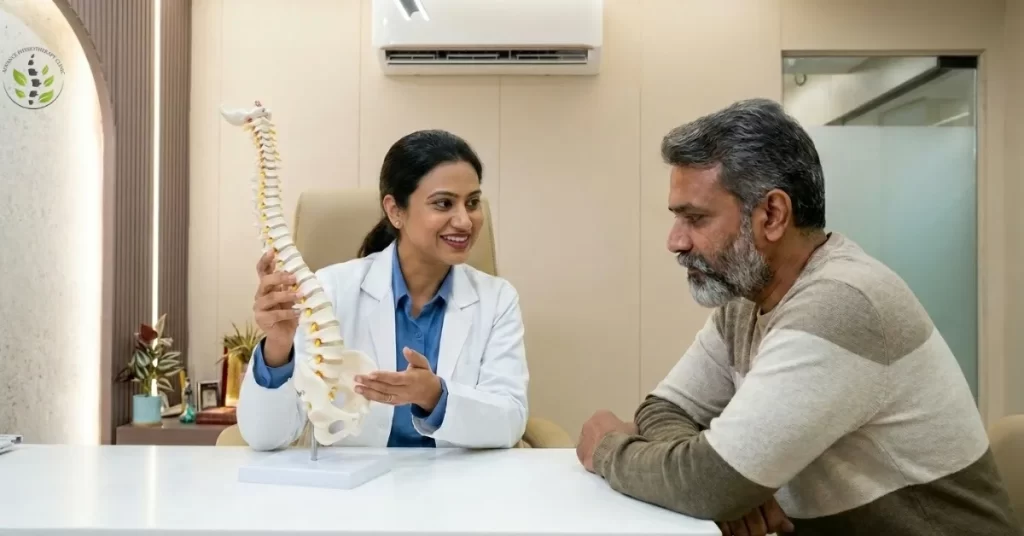
When you are in agony, surgery can sound like a quick fix. However, invasive spinal procedures carry significant risks. “Failed Back Surgery Syndrome” (FBSS) is a very real condition where patients continue to experience chronic pain even after a successful operation. Add in the high costs, the risk of infection, and the long months of post-op recovery, and it becomes clear why conservative care should always be tried first.
At Advance Physiotherapy Clinic in Chhatrapati Sambhajinagar, Dr. Kalyani utilizes international Swedish chiropractic standards to fix the structural alignment of your spine safely, keeping you out of the operating room.
Top Non-Surgical Treatments for Sciatica & Slipped Discs
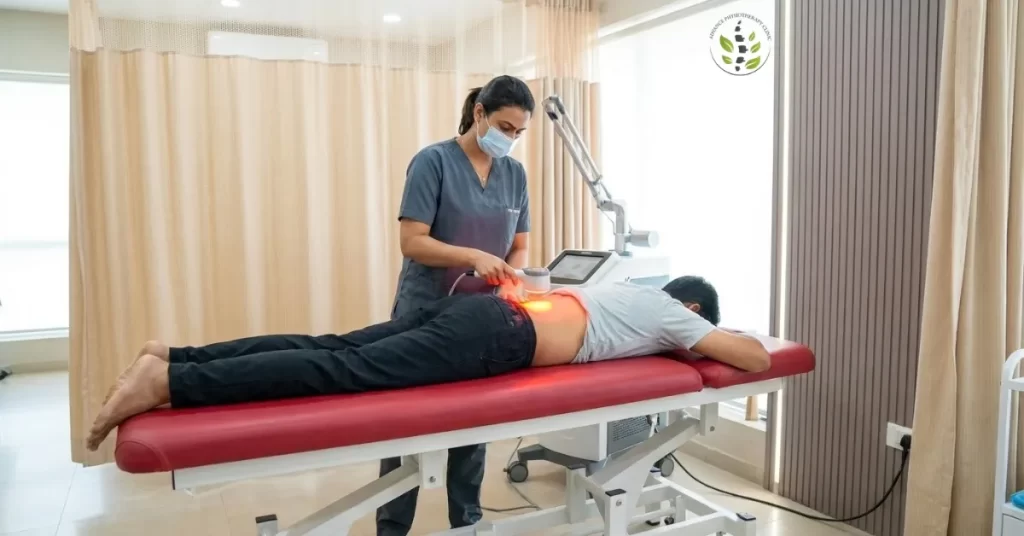
Instead of relying on temporary painkillers or rushing into surgery, here is how the best treatment for slip disc in India actually works at a premium rehabilitation center:
- Chiropractic Adjustments & Spinal Decompression: Using highly specialized manual techniques, we gently open up the space between your vertebrae. This creates a vacuum effect that pulls the bulging slipped disc back into its proper place, instantly taking the pressure off your pinched sciatic nerve.
- Class 4 Robotic Laser Therapy: A pinched nerve becomes incredibly inflamed and swollen. Our high-tech Class 4 Laser penetrates deep into the spinal tissue to reduce cellular inflammation and accelerate tissue healing far faster than traditional ice packs or heating pads.
- Advanced Physiotherapy & Active Rehab: Pain relief is only step one. To ensure the disc doesn’t slip again, targeted physiotherapy treatment for low back pain is required. In our fully equipped rehab gym, we guide you through clinical exercises to strengthen your core and stabilize your spine for long-term health.
Exercises for Instant Sciatica Pain Relief at Home
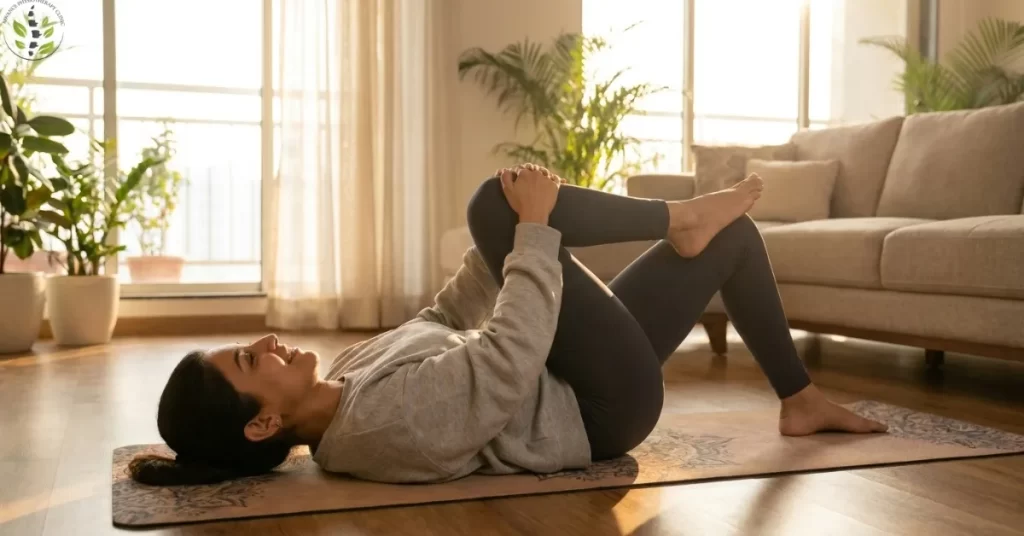
If you are stuck at home and in agony, popping temporary pain relief tablets won’t fix the structural issue. Instead, try these two gentle sciatica pain relief exercises.
(Note: If these cause sharp pain, stop immediately and consult a professional).
- The Knee-to-Chest Stretch: Lie flat on your back on a comfortable mat. Slowly bring one knee up to your chest, holding it gently with both hands for 20-30 seconds. This helps open up the lower back and relieve pressure on the spinal discs, providing instant sciatica pain relief.
- The Seated Piriformis Stretch: Sit in a chair with both feet flat on the floor. Cross your painful leg over the other so your ankle rests on your opposite knee (like a figure-four). Gently lean forward keeping your back straight. This stretches the piriformis muscle in your glutes, which often traps the sciatic nerve. It is an excellent lower back pain treatment at home.
Patient Success Story: Overcoming Severe Spinal Trauma and Misguided Advice
When dealing with severe spinal pain, the journey to finding the right diagnosis can be exhausting and terrifying. This was the reality for Nivedita, a patient who came to us after suffering an accident that left her with debilitating neck pain.
Like many people, Nivedita was initially advised by others to just “keep exercising” through the pain. But as she continued going to the gym, her condition rapidly deteriorated until the pain felt like “somebody was drilling a hole in my head.” Desperate for a solution, she visited an orthopedic surgeon, a neurologist, and even other physiotherapists. Instead of a cure, she was met with dismissal. Some told her it was just “stress,” while others gave her completely incorrect recommendations, like using cold packs for a long-term chronic injury. By the time she moved to Chhatrapati Sambhajinagar for work, she had almost given up hope.
That changed when she found Advance Physiotherapy Clinic.
Dr. Kalyani and our dedicated team (including Dr. Aarti and Dr. Ruchita) took the time to properly assess her trauma. Through a dedicated, non-surgical rehabilitation plan of 60 sessions, Nivedita’s life completely turned around.
- She successfully broke free from the intense, drilling pain without any invasive procedures.
- She is now able to manage her life on her own, excel at her job, and return to her hobbies and gym routine safely.
As Nivedita advises anyone currently feeling stuck, misguided, or scared about their spine pain: “Be patient and trust your doctors here, because they know what they’re doing.”
Conclusion: Take Control of Your Spine Health
You do not have to live with debilitating sciatica, and you do not have to rush into a risky spinal surgery. By identifying the root cause of your pain and utilizing advanced chiropractic adjustments alongside high-tech modalities, your body can heal naturally.
If you are suffering from a slipped disc or severe nerve pain, don’t wait for it to get worse. Book a Root Cause Diagnostic Consultation at Advance Physiotherapy Clinic in Chhatrapati Sambhajinagar today, and let us help you get your active life back.
Call us today or send us a message on WhatsApp to schedule your appointment!
Frequently Asked Questions (FAQs)
Q1: Can a slipped disc heal completely without surgery?
Ans: Yes. In over 80% of cases, a slipped disc can heal without surgery. Non-surgical treatments like chiropractic adjustments, spinal decompression, and Class 4 Laser Therapy relieve pressure on the spinal nerves and reduce inflammation, allowing the disc to heal naturally over time.
Q2: How do I know if my back pain is sciatica or a slipped disc?
Ans: A slipped disc typically causes localized, locking pain in the lower back or neck, especially when bending or sitting. Sciatica is a symptom that occurs when that disc pinches a nerve, causing sharp, electrical, or burning pain to shoot down one leg.
Q3: What is the fastest way to get instant sciatica pain relief?
Ans: For immediate relief at home, gentle stretches like the Knee-to-Chest stretch or Seated Piriformis stretch can take pressure off the sciatic nerve. However, for fast, clinical relief, advanced modalities like Class 4 Robotic Laser Therapy rapidly reduce deep tissue inflammation around the pinched nerve.
Q4: Is walking good for a slipped disc and sciatica?
Ans: Yes, light to moderate walking is generally good for sciatica and slipped discs because it promotes blood flow, which aids healing. However, you should walk on flat surfaces, avoid long distances that trigger sharp pain, and combine walking with targeted physiotherapy exercises for core strengthening.
Q5: Which therapy is best for a slipped disc in the lower back?
Ans: The most effective treatment combines multiple therapies. Chiropractic spinal decompression opens the vertebrae to pull the disc back into place, Class 4 Laser therapy reduces swelling, and active physiotherapy strengthens the core to ensure the spine remains stable and the pain does not return.