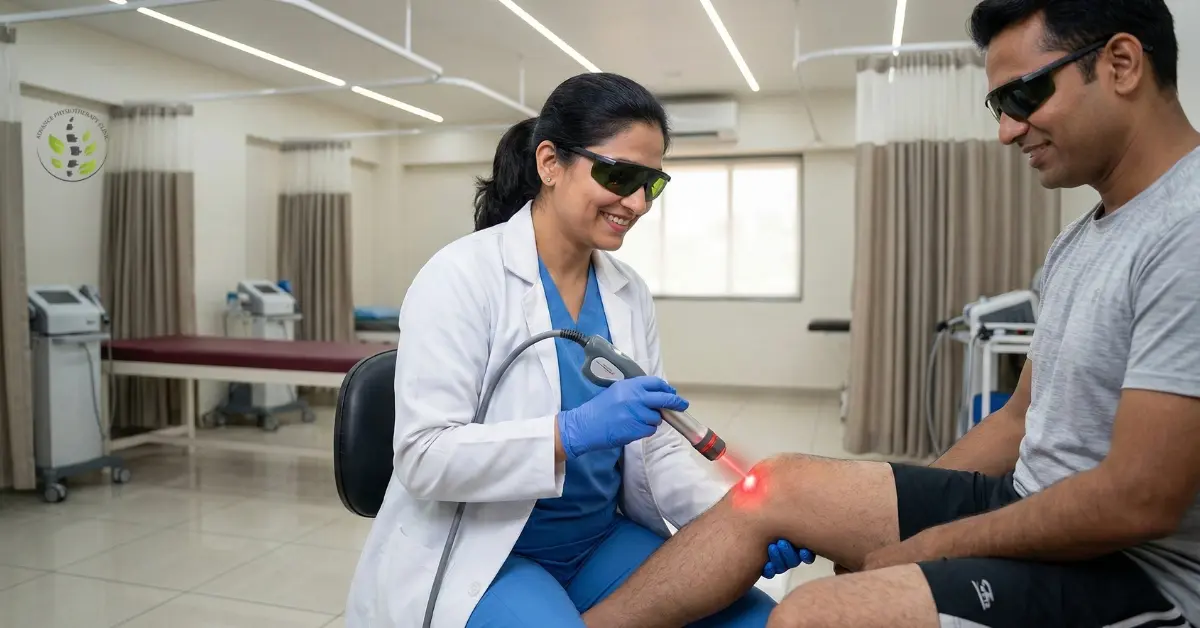
Tendonitis does not just cause pain. It steals your mobility and sidelines you from daily life. If you are tired of relying on ice packs and temporary pain pills, you need a solution that repairs tissue at the cellular level. Class 4 Laser Therapy is the absolute fastest way to heal damaged tendons without surgery.
By delivering high-intensity, deep-penetrating light directly into the inflamed tissue, this technology triggers rapid collagen synthesis and stops pain at its source. At Advance Physiotherapy Clinic, we integrate High-Intensity Laser Therapy (HILT) into our advanced physiotherapy treatments to cut your recovery time in half.
What is High-Intensity Class 4 Laser Therapy?
High-Intensity Laser Therapy (HILT) is a medical-grade treatment designed for severe musculoskeletal pain. To understand how it works, you must understand the physics of light. Laser therapy uses specific wavelengths of red and near-infrared light to create therapeutic effects within the human body.
These advanced medical devices deliver a powerful, concentrated beam of photons deep into your muscles, ligaments, and tendons. Once these photons reach the damaged tissue, they trigger a biological cascade that dramatically accelerates the body’s natural healing timeline. This process provides immediate relief from swelling, reduces nerve sensitivity, and restores your range of motion without the need for invasive injections or prolonged rest.
The Science Behind Class 4 Laser Therapy
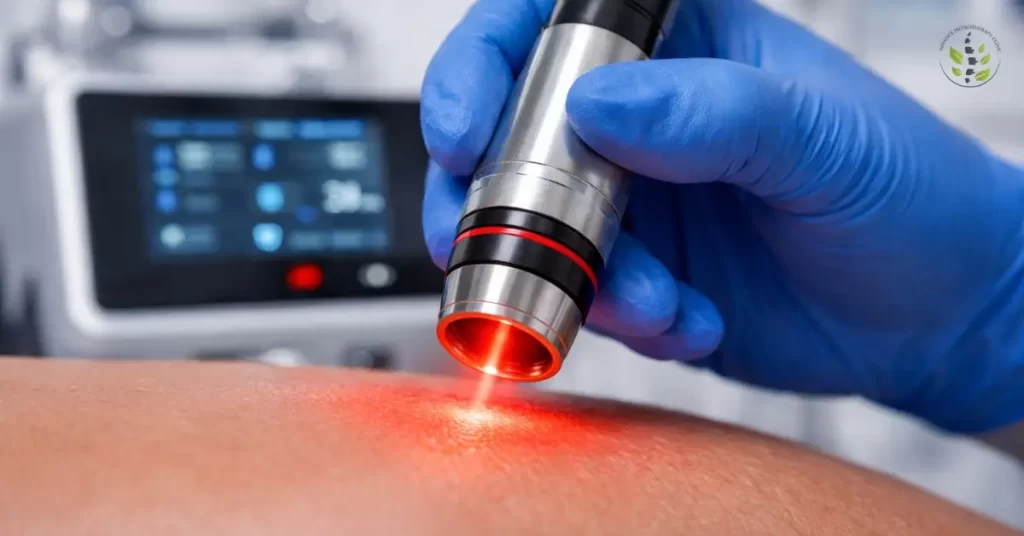
The clinical term for this treatment is Photobiomodulation (PBM). The mechanism of action is completely photochemical, meaning the light energy creates chemical reactions inside your cells rather than just relying on heat to dull the pain.
When you suffer from tendonitis, your cells are damaged and starved of oxygen. Tendons notoriously have a poor blood supply. This is exactly why they take months to heal on their own. Class 4 lasers bypass this limitation through three specific biological mechanisms:
- ATP Stimulation: The laser light penetrates the skin and is absorbed by photoreceptors within the mitochondria of your cells. This interaction drastically boosts the production of Adenosine Triphosphate (ATP). ATP is the primary energy carrier in all living organisms. By flooding the injured tendon with ATP, your cells finally have the raw energy required to repair micro-tears and build new tissue.
- Massive Vasodilation: Laser irradiation energizes the surrounding tissue and improves microcirculation. It opens up the blood vessels, allowing oxygen-rich blood to flood the hypoxic (oxygen-starved) injury site. This flushes out the inflammatory cytokines that cause swelling and acute pain.
- Neural Inhibition: The therapy immediately slows the speed of neural transmission in the peripheral nerves. This creates a profound analgesic effect. It essentially blocks the pain signals from reaching your brain while simultaneously relaxing painful muscle spasms.
The Difference Between Class 4 Laser and Class 3 Laser for MSK Conditions
If you have researched laser therapy, you have likely seen clinics advertising “cold lasers” or Class 3b lasers. Understanding the difference between these two classifications is critical for your recovery. The categorisation of lasers relates directly to their power output.
Class 3b lasers have a maximum power output of 500 milliwatts (0.5 watts). Because of this low power ceiling, Class 3b devices can only treat small, superficial areas. The light energy simply cannot penetrate deep enough into the joint to reach severe tendon damage. Furthermore, achieving a therapeutic dose with a 0.5-watt laser takes an incredibly long time.
Class 4 lasers change the rules completely. These devices operate at power levels well above 500 milliwatts, often reaching 10 to 24 watts. This massive increase in power density provides three distinct clinical advantages:
- Deep Tissue Penetration: The higher power allows the photons to penetrate several centimeters beneath the skin. This makes Class 4 lasers highly effective for deep musculoskeletal structures like the lumbar spine, hips, and thick tendons.
- Expedited Treatment Times: A 15-watt Class 4 laser can deliver the exact same therapeutic dosage as a Class 3b laser over 30 times faster. What takes an hour with a cold laser takes less than six minutes with High-Intensity Laser Therapy.
- Expanded Treatment Areas: Clinicians can treat a much larger surface area rapidly. This ensures the entire injured region receives a uniform, healing dose of light energy.
Benefits of High-Intensity Class 4 Laser Therapy at Advance Physiotherapy Clinic
Traditional treatments force you to wait weeks for minor improvements. Our High-Intensity Laser Therapy protocols offer immediate, compounding benefits.
- Rapid Collagen Synthesis: By directly stimulating cellular metabolism, the laser accelerates the production of collagen. This physically rebuilds the damaged tendon fibers much faster than natural rest.
- Immediate Pain Reduction: The therapy decreases nerve sensitivity and rapidly reduces swelling. You walk out of the clinic in significantly less pain than when you walked in.
- Lightning-Fast Sessions: You do not need to block out hours of your day. A standard session at our clinic takes just a few minutes and is completely painless. You will only feel a soothing, deep warmth as the laser glides over your skin.
- Non-Invasive and Safe: Unlike cortisone injections that can weaken tendons over time, laser therapy is entirely non-invasive. It has no side effects and works by enhancing your body’s natural cellular defenses.
Applications in Sports and Rehabilitation
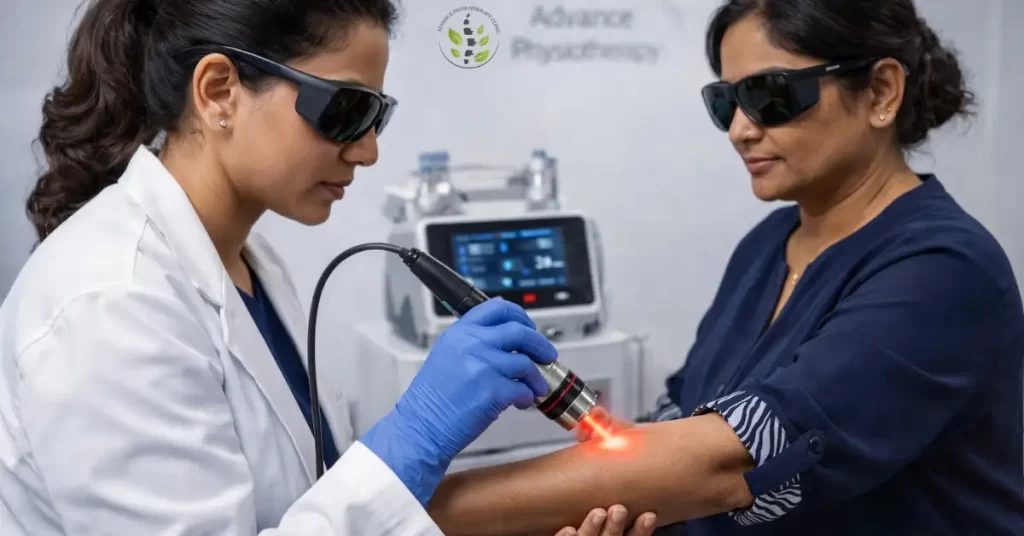
Athletes and active professionals cannot afford to be sidelined for months. Class 4 laser therapy is the gold standard in sports rehabilitation because it treats the root cause of the injury rather than just masking the symptoms.
We successfully utilize this technology to treat a wide variety of stubborn sports injuries:
- Tennis Elbow (Lateral Epicondylitis): Deep laser penetration repairs the severe micro-tears in the forearm tendons caused by repetitive wrist extension.
- Achilles Tendonitis: The laser flushes out localized swelling in the ankle and rebuilds the thickest tendon in the human body.
- Rotator Cuff Injuries: High power output allows the light energy to penetrate the thick shoulder muscles to heal the underlying tendon structures.
- Plantar Fasciitis: The therapy targets the inflamed fascia on the bottom of the foot, providing rapid relief from chronic heel pain.
For maximum athletic recovery, we frequently combine laser protocols with matrix rhythm therapy to completely release surrounding muscle tension.
Class 4 Laser Therapy vs. Traditional Treatments
When treating stubborn tendonitis, you have options. However, most standard medical approaches only manage the symptoms. Laser therapy is the only non-invasive option that actively accelerates tissue regeneration.
| Treatment Method | Healing Mechanism | Speed of Relief | Side Effects |
|---|---|---|---|
| Class 4 Laser Therapy | Boosts ATP production & collagen synthesis | Immediate (1 to 4 sessions) | None (Non-invasive) |
| Cortisone Injections | Masks severe inflammation artificially | Fast but temporary | Can weaken the tendon over time |
| NSAIDs (Painkillers) | Chemical pain receptor block | Slow to moderate | Stomach irritation, does not heal tissue |
| Rest & Ice (RICE) | Natural, unaided cellular repair | Very slow (Weeks to Months) | Muscle atrophy from inactivity |
Conclusion
Living with restricted mobility drains your energy. You do not have to accept chronic tendonitis as a normal part of life. Get permanent relief at the cellular level today. Click the WhatsApp button on this page to schedule your advanced laser consultation with Dr. Kalyani Toshniwal at Advance Physiotherapy Clinic.
Frequently Asked Questions About Laser Therapy
Q1. Is Class 4 Laser Therapy painful?
Ans: No. The treatment is completely painless. You will only feel a comfortable, warm sensation over the targeted area as the laser stimulates blood flow and cellular activity.
Q2. How many HILT sessions do I need for tendonitis?
Ans: Every injury is unique. However, most patients require six to eight sessions for complete, permanent healing. You will likely feel a massive reduction in stiffness after just your first or second visit.
Q3. Can HILT therapy for joint pain treat chronic issues?
Ans: Yes. The deep penetration capabilities make Class 4 lasers highly effective for stubborn, chronic conditions like frozen shoulder, plantar fasciitis, and long-term joint degeneration.