You have been living with neck pain for three months. Or maybe your lower back locks up every morning before you even get out of bed. A colleague tells you to see a chiropractor. You search “chiropractor in Chhatrapati Sambhajinagar” and find a few names. How do you know which one is actually qualified to treat your specific condition safely?
This is the question most patients in Chhatrapati Sambhajinagar never ask. They book the first available appointment without knowing what credentials to look for, which conditions genuinely respond to spinal care, and what red flags to watch out for.
This guide gives you all of that. You will make the right decision for your spine the first time.
Why Chiropractic Care Is Growing in Chhatrapati Sambhajinagar
Chhatrapati Sambhajinagar has seen a significant shift in how patients approach pain management over the last few years. With a rising number of IT professionals, desk-job workers, and students spending 8 to 10 hours daily in front of screens, spinal problems have become one of the most common reasons patients visit clinics in areas like Garkheda, Cidco, Vijay Nagar, and N-5.
The traditional approach of pain medication and rest only masks the symptom. It does nothing to correct the structural cause. This is precisely why more patients in the city are bypassing temporary fixes and exploring professional chiropractic treatment to correct the mechanical root of their pain.
However, not all providers offer the same level of training, technique, or safety standards. Knowing how to evaluate your options protects your health and ensures you get real results.
5 Conditions That Genuinely Respond to Spinal Care
Before choosing a clinic, it helps to know whether your condition actually benefits from spinal manipulation. Care is clinically proven to be effective for the following:
1. Chronic Lower Back Pain
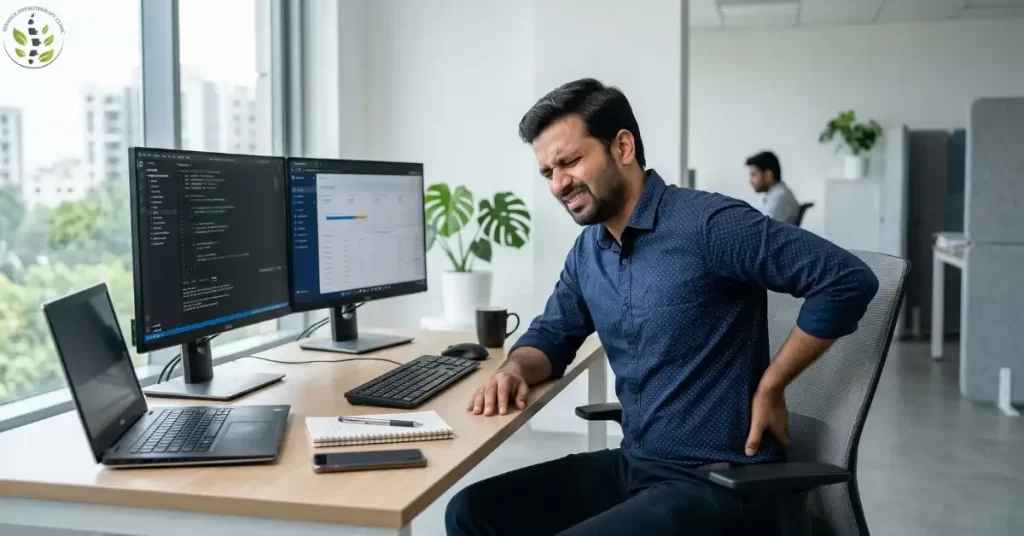
This is the most common reason patients visit a clinic locally. When the lower vertebrae lose their normal alignment due to prolonged sitting or poor posture, they compress the surrounding nerve roots and create the aching, stiff pain most desk workers know too well. Adjustments restore joint mobility and directly relieve this nerve pressure.
2. Neck Pain and Cervical Stiffness
Cervical stiffness caused by mobile phone use, poor sleeping position, or screen-heavy work is increasingly common among patients aged 25 to 45. Targeted cervical adjustments restore the natural curve of the neck and relieve the tension headaches that often accompany this condition.
3. Sciatica
Sciatica produces a sharp, shooting pain that travels from the lower back down through the buttock and into the leg. It is caused by a compressed or irritated sciatic nerve root. This is often due to a disc bulge or spinal misalignment. Clinical adjustments combined with spinal decompression techniques effectively reduce this compression and stop the radiating pain. To understand exactly how this works, we break down the mechanics in our detailed patient guide to chiropractic adjustments.
4. Headaches and Migraines Linked to Neck Tension
A significant proportion of recurring headaches originate not in the brain but in the cervical spine. When the upper neck vertebrae are misaligned, they create chronic muscle tension and restrict blood flow. Both of these factors trigger headaches. Cervical adjustments address this mechanical root cause directly.
5. Post-Injury Joint Stiffness
After a fall, sports injury, or road accident, joint stiffness often develops as the surrounding muscles guard the injured area. Over time, this protective tension becomes chronic even after the original injury has healed. Gentle mobilisation, especially when combined with targeted dry needling sessions, releases this residual tension and restores your full range of motion.
The 4 Qualifications to Look For Locally
This is the section most patients skip. It is also the one that matters most. In India, practice is not as tightly regulated as in countries like the UK, Canada, or the US. This means the burden falls on the patient to verify credentials before trusting someone with their spine.
Here is exactly what to check:
1. Formal Physiotherapy Degree as a Base (BPT or MPT)
A qualified provider in India should have a formal physiotherapy qualification, such as a BPT (Bachelor of Physiotherapy) or MPT (Master of Physiotherapy), as their foundation. This ensures they have clinical training in anatomy, diagnosis, and patient assessment before specialising in spinal manipulation. Without this base, a provider may lack the diagnostic skills to safely identify when adjustments are contraindicated.
2. Internationally Recognised Certification
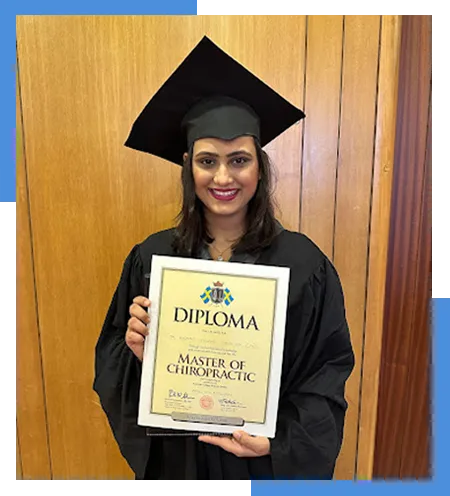
Look for certifications from recognised international institutions. Training from accredited institutes in Sweden, Canada, the UK, or the USA carries the highest clinical standards. Dr. Kalyani Toshniwal holds a Master of Chiropractic from the Ackermann Institute, Stockholm (Sweden). This is one of the most respected training institutions globally.
3. Manual Therapy Certification (COMT or DOMPT)
COMT (Certified Orthopaedic Manual Therapist) and DOMPT (Diploma in Orthopaedic Manual Physical Therapy) are advanced certifications that demonstrate expertise in hands-on joint and spinal techniques. A practitioner who also holds these qualifications brings a significantly broader clinical toolkit to your treatment.
4. Experience Treating Your Specific Condition
General experience is not the same as specific condition expertise. Ask directly: “Have you treated patients with my condition before, and what outcomes did they typically see?” A confident, evidence-backed answer is a good sign. Vague or dismissive responses are a massive red flag.
Questions to Ask Before Your First Appointment
Most patients walk into a clinic without asking a single question. These five questions will immediately tell you whether the provider is right for you:
“What is your assessment process before treatment?”
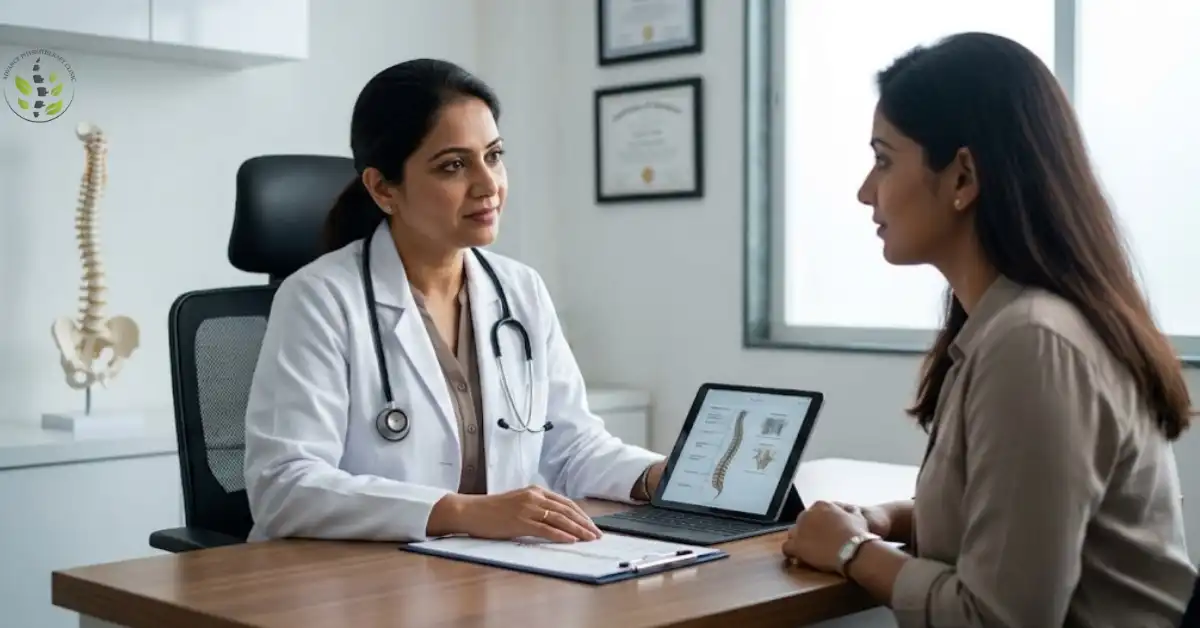
A qualified professional never adjusts a spine without first conducting a thorough postural and biomechanical assessment. If the answer is anything other than a clear description of a clinical evaluation process, walk away.
“Do you integrate physiotherapy with your treatments?”
Standalone spinal adjustments produce results, but they hold longer and heal faster when combined with targeted physiotherapy. Advanced modalities like electrotherapy, clinical shock wave therapy, and guided rehabilitation exercises address the surrounding soft tissue and ensure the adjustment produces lasting change.
“How many sessions will my condition likely need?”
No ethical provider can give you a precise number before an initial assessment. However, they should be able to give you a realistic range based on your condition. Be cautious of anyone who promises permanent results in a single session without evaluating you first.
“Are there any conditions where you would NOT adjust my spine?”
This question reveals clinical competence. A properly trained practitioner will immediately tell you that manipulation is contraindicated in cases of severe osteoporosis, spinal infection, certain types of fractures, or active cancer in the spine. If the provider hesitates or says they can treat anything, you should look elsewhere.
“What happens after the adjustment? What is the aftercare protocol?”
Recovery does not end when you leave the clinic. A good provider will give you specific home exercise guidance, postural advice, and a follow-up schedule tailored to your condition.
Why an Integrated Clinic Produces Better Results
A standalone practitioner adjusts your spine. This is valuable, but it addresses only one dimension of your problem.
The most effective approach in 2026 combines spinal adjustments with the full range of advanced physiotherapy modalities. This is the exact model used at Advance Physiotherapy Clinic in Chhatrapati Sambhajinagar. Here is why this produces faster and more permanent results:
Before an adjustment, deep tissue technologies like Matrix Rhythm Therapy relax the surrounding musculature and reduce protective spasm. This allows the adjustment to move the joint through its full range without resistance, making it more precise and highly effective.
After the adjustment, targeted rehabilitation exercises retrain the postural muscles to hold the corrected alignment. Without this step, many patients find their spine gradually returns to its old position, requiring repeated adjustments indefinitely.
This is not a problem unique to our city. It is the most common reason patients globally report that their treatments stopped working after a few sessions. They were receiving adjustments without the integrated therapeutic support that makes them permanent.
For office workers dealing with the constant lower back ache caused by desk jobs, this integrated model is particularly critical. The postural habits driving the problem are reinforced 8 hours every working day and require continuous muscular retraining.
Treatment at Advance Physiotherapy Clinic: Chhatrapati Sambhajinagar
At Advance Physiotherapy Clinic in Vijay Nagar, Garkheda, Chhatrapati Sambhajinagar, Dr. Kalyani Toshniwal Modani brings a level of qualification that is rare in the Marathwada region.
Her training includes:
- Master of Chiropractic: Ackermann Institute, Stockholm, Sweden
- Masters in Osteopathy: Canada
- DOMPT: Diploma in Orthopaedic Manual Physical Therapy
- COMT: Certified Orthopaedic Manual Therapist
- CDNT: Certified Dry Needling Therapist
Every patient at the clinic begins with a comprehensive postural and biomechanical assessment. No adjustment is performed until the specific structural restrictions have been identified and a treatment plan has been discussed with the patient in full.
Adjustments at the clinic are performed using Ackermann-based techniques. This is a precision method developed in Sweden that uses the minimum necessary force to achieve maximum joint mobility. This approach is highly effective for patients who are nervous about the traditional high-force image of spinal care.
Book Your Assessment in Chhatrapati Sambhajinagar
If you have been living with back pain, neck stiffness, sciatica, or recurring headaches, a qualified clinical assessment is the first real step toward fixing the problem. Stop just managing your pain.
Dr. Kalyani Toshniwal Modani at Advance Physiotherapy Clinic, Chhatrapati Sambhajinagar is available Monday to Saturday 9:30 AM – 8:00 PM and Sunday 9:00 AM – 5:00 PM.
Schedule your initial assessment with our team today to get a clear clinical answer to what is actually causing your pain and what it will take to permanently fix it.
Advance Physiotherapy Clinic | Plot No. 73, Vijay Nagar, Gajanan Maharaj Mandir Road, Garkheda, Chhatrapati Sambhajinagar | +91 84089 99939